Steel is one of the most widely used materials in manufacturing, fabrication, and construction. Among the many steel products available, flat bars are extremely versatile — used in machining, support structures, brackets, frames, industrial equipment, and more. However, many buyers get confused between Steel Flat Bars and MS Flat Bars, assuming both are the same.
In this guide, we break down the difference between Steel Flat Bar vs MS Flat Bar, their properties, uses, pricing, and how to choose the right one for your project.
We’ll also explore real-world industrial usage and reference Udhhyog as a reliable resource for industrial steel requirements.
What is a Steel Flat Bar?
A Steel Flat Bar is a long, rectangular metal bar made from carbon steel, alloy steel, stainless steel, or tool steel. It is manufactured through hot rolling or cold drawing to achieve a consistent width, thickness, and high strength.
Key Characteristics
- Available in multiple grades (EN8, EN9, EN19, EN24, SS304, SS316, etc.)
- Offers high tensile strength
- Excellent corrosion resistance (if stainless or alloy grade)
- Suitable for heavy load structural applications
- Higher durability compared to mild steel
Common Applications
- Industrial machine parts
- Railway components
- Automobile parts
- Fabricated structures
- Heavy engineering
- Brackets, clamps, base plates
- Construction and framing
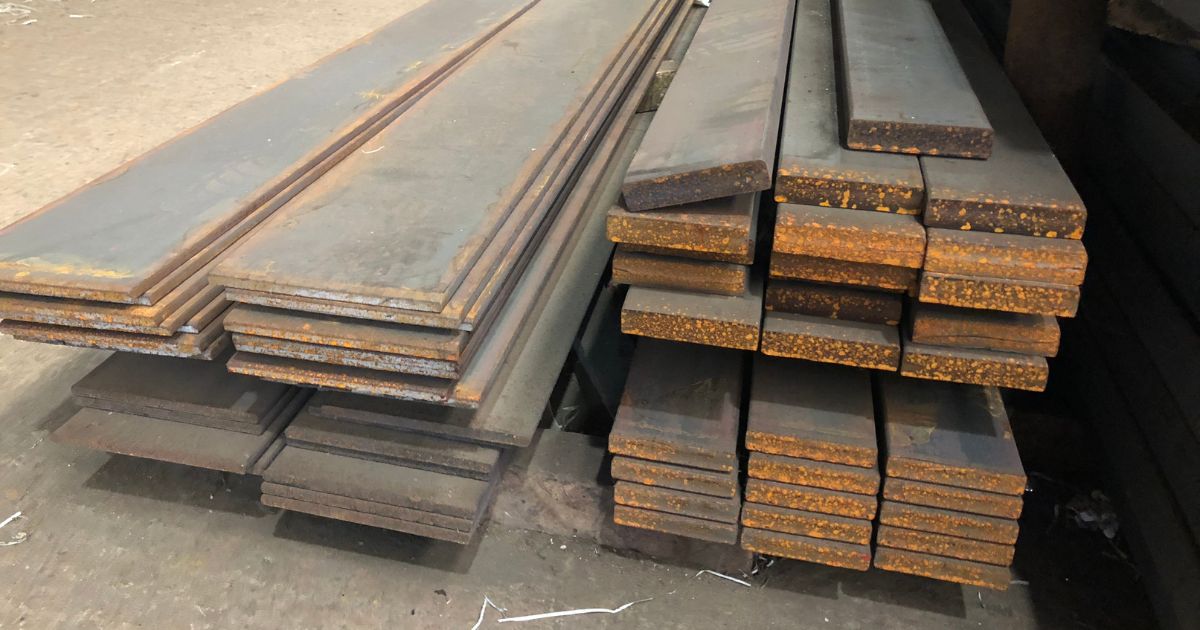
What is an MS Flat Bar?
An MS (Mild Steel) Flat Bar is made from low-carbon steel containing approx. 0.05%–0.25% carbon. It is economical, easy to weld, and widely used in everyday fabrication and construction work.
Key Characteristics
- Lower tensile strength compared to alloy or stainless steel
- Highly weldable and formable
- Affordable and suitable for medium-strength applications
- Available in a wide range of sizes
- Ideal for fabrication shops, construction, railings, and gates
Common Applications
- Frames and support structures
- Doors, grills, and gates
- General fabrication
- Construction reinforcement
- Automobile body parts
- Storage racks
- Industrial sheds
Steel Flat Bar vs MS Flat Bar – Key Differences
| Feature | Steel Flat Bar | MS Flat Bar |
| Material | Alloy, carbon steel, stainless, tool steel | Mild steel (low carbon) |
| Strength | Higher tensile & impact strength | Moderate strength |
| Corrosion Resistance | Excellent (varies by grade) | Low unless galvanized |
| Weldability | Good but varies by alloy | Excellent |
| Price | Higher | Lower |
| Best For | Industrial & high-stress applications | Regular fabrication & construction |
Which One Should You Choose?
Choose Steel Flat Bar if:
- You need high strength & load-bearing capacity
- The application demands corrosion resistance (marine, chemical, outdoor)
- Precision, durability, and longevity are important
- You’re building machinery, tools, or structural frameworks
Choose MS Flat Bar if:
- Your project is budget-oriented
- You need excellent weldability and formability
- The application doesn’t demand extreme strength
- You work in fabrication, construction, or metalwork shops
Industrial Demand & Usage
Industries often require flat bars in large quantities for automotive parts, structural components, machine manufacturing, and fabrication units. According to industrial demand trends, MS flat bars remain the most consumed due to affordability, while steel flat bars (EN-series & SS) are used in heavy engineering, automotive, and machinery tooling where performance is critical. For reliable sourcing, you can also explore Udhhyog Steel Industrial Catalyst for quality steel products.
suppliers cater to:
- Heavy machinery factories
- Steel fabricators
- Industrial equipment manufacturers
- OEM parts suppliers
- Construction contractors
This makes both MS and Steel Flat Bars vital for India’s industrial growth.
Steel Flat Bar vs MS Flat Bar Price Difference
- MS Flat Bar Price → ₹50 to ₹70 per kg
- Carbon/EN Steel Flat Bar → ₹85 to ₹150 per kg
- Stainless Steel Flat Bar (304/316) → ₹180 to ₹350 per kg
Prices depend on:
- Size & thickness
- Grade
- Processing type (hot rolled, cold drawn)
- Market steel rate
Conclusion
When comparing Steel Flat Bar vs MS Flat Bar, the choice depends entirely on your project needs. MS Flat Bars offer great affordability and weldability, making them ideal for general fabrication and construction. Steel Flat Bars, on the other hand, provide superior strength, corrosion resistance, and durability for demanding industrial applications.
Before purchasing, always evaluate:
- Required strength
- Environment (corrosion levels)
- Budget
- Grade availability
- End use
Whether you’re sourcing for a workshop or industrial unit, choosing the right flat bar ensures long-lasting performance and value for money
If you’re also looking for Channel bars, you can check out our flat category as well.