Flat bars, commonly known as MS (Mild Steel) Flats, are among the most versatile steel products used across construction, industrial machinery, and structural fabrication. Their simple rectangular cross-section, easy workability, and wide availability make them a reliable raw material for heavy industries as well as small-scale workshops. Available in a variety of widths and thicknesses, MS Flat Bars are produced following IS:2062 standards and are widely preferred for applications where strength, flexibility, and precision are essential.
Whether you are a builder, a contractor, or a fabrication workshop owner, understanding the real-world applications of MS Flat Bars helps you choose the right material, optimize project cost, and ensure structural safety.
What Are MS Flat Bars?
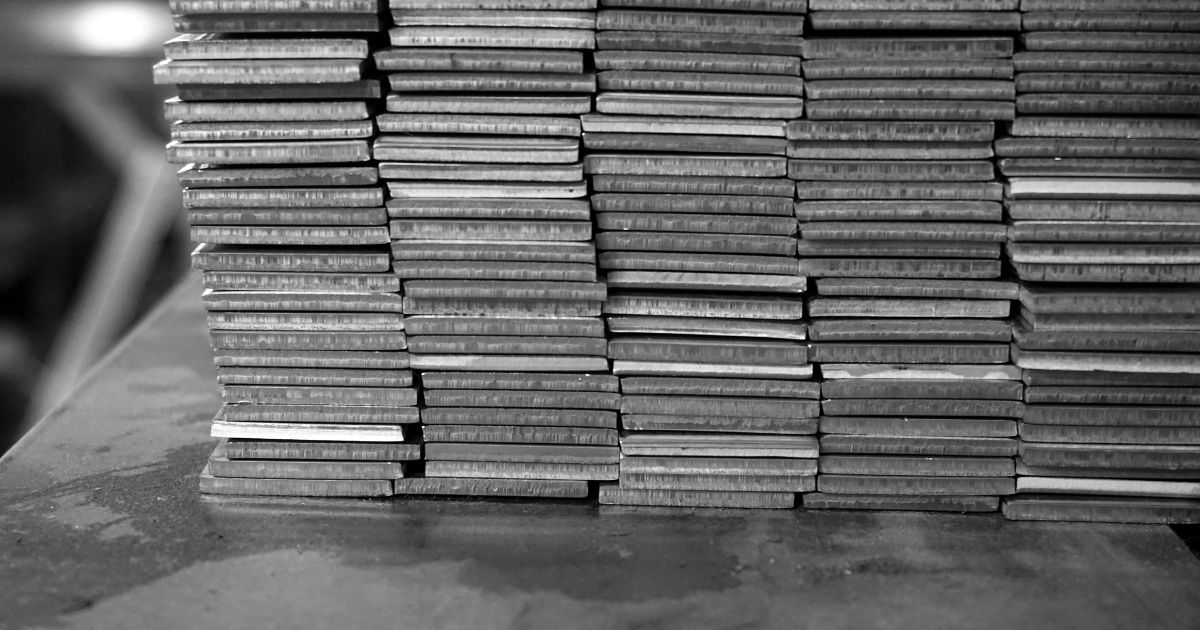
MS Flat Bars are mild steel products with a rectangular shape, represented by Width × Thickness.
Example: 25 × 5 Flat Bar = 25 mm width & 5 mm thickness.
They are widely used because:
- Mild steel is easy to cut, drill, bend, and weld.
- Their flat profile allows uniform load distribution.
- They are cost-effective compared to other structural steel items.
- They come in hundreds of size variations, making them suitable for customized work.
Applications of Flat Bars in Construction, Machinery & Fabrication
MS Flat Bars have a significant presence in multiple industries. Let’s explore how various sectors depend on them:
1. Applications of MS Flat Bars in Construction
In construction and infrastructure development, flat bars serve as essential load-bearing and reinforcement components. Their durability and flexibility make them ideal for both residential and industrial projects.
a) Gratings, Frames & Support Structures
Flat bars are widely used to manufacture:
- Industrial flooring gratings
- Staircase gratings
- Drain covers
- Platform walkways
Their rigid rectangular shape provides excellent load-carrying capacity.
b) Railway Bridges & Metro Infrastructure
Many railway bridge components, handrails, base plates, and stiffeners are made using MS flat bars due to their ability to handle vibration and mechanical stress.
c) Building Reinforcement
They are used in:
- Column and beam stiffeners
- Roof trusses
- Bracings and lintels
- Boundary wall support frames
Flat bars offer structural reinforcement where rebars or channels cannot be used.
d) Window Grills, Gates & Doors
In residential construction, flat bars are a preferred material for:
- Window grills
- Security gates
- Doors and railings
Their clean, straight profile allows aesthetic finishing.
e) Solar Panel Mounting Structures
With the growing solar industry, flat bars are used in:
- Mounting stands
- Brackets
Support arms
Their corrosion resistance ensures long-term durability.
2. Applications in Machinery & Industrial Equipment
Industries rely heavily on MS Flat Bars for machine manufacturing, repair, and assembly due to their machinability.
a) Base Plates & Machine Frames
Flat bars form the foundation for:
- Base plates
- CNC machine frames
- Industrial conveyor supports
They provide a smooth, stable surface for precise alignment.
b) Fabrication of Tools & Industrial Components
Machinery parts such as:
- Brackets
- Couplings
- Clamps
- Hinges
- Connecting plates
are commonly manufactured from flat bars.
c) Heavy Equipment & Automotive Industry
In the automotive and heavy equipment sector:
- Loader brackets
- Bus body parts
- Truck chassis reinforcements
- Mounting plates
Their strength-to-cost ratio makes them an economical choice.
d) Agricultural Machinery
Flat bars are essential in manufacturing:
- Tractor parts
- Tiller blades
- Frame components
Harvester attachments
Agricultural tools require strong yet flexible steel—MS flats perfectly fit the requirement.
3. Applications of Flat Bars in Fabrication Industry
The fabrication industry is one of the largest users of MS Flats because they are easy to cut, bend, and weld.
a) Custom Metal Fabrication
Flat bars are ideal for:
- Furniture frames
- Shelving units
- Racks
- Support bars
- Design elements
Fabricators can shape them into almost any form required.
b) Industrial Shed Fabrication
Use of MS flats:
- Purlins
- Trusses
- Bracing
- Joint stiffeners
Their uniform dimensions make fabrication smooth and efficient.
c) Fencing & Boundary Structures
From simple home fences to high-security industrial boundaries, flat bars are used as:
- Vertical bars
- Horizontal supports
- Perimeter frames
d) Welding Works
mild steel welds easily, flat bars are used in:
- Welding frames
- Repair works
- Temporary structures
- Permanent fixtures
Why Industries Trust MS Flat Bars (Industrial Perspective)
Industries—especially steel-dependent sectors—prefer MS Flats because they are:
- Affordable compared to other structural steel materials
- Easy to procure from rolling mills across India
- Highly weldable and formable
- Available in custom sizes from 12 mm to 300 mm widths
- Suitable for both light & heavy-duty applications
In India, demand for MS flat bars remains consistently high. Platforms like Udhhyog and other industrial marketplaces help buyers compare prices, locate nearby suppliers, and get real-time rates for MS flat bars, ensuring transparency and reliability in procurement across construction and manufacturing sectors.
Grades, Standards & Quality
Most MS Flat Bars in the market are produced by secondary rolling mills and follow IS 2062 grade standards.
Grades include:
- IS 2062 E250
- IS 2062 E350
These grades ensure:
- Good strength
- Ductility
- Consistency in mechanical performance
Conclusion
MS Flat Bars play an indispensable role across construction, machinery, and fabrication industries. Their versatility, affordability, and ease of use make them a preferred raw material for both large-scale industrial projects and small workshops. Whether you’re reinforcing a building, manufacturing equipment, or fabricating custom metal structures, MS Flat Bars provide strength, stability, and long-term reliability.
For related materials, feel free to explore our Pipe category too.