Pipe fittings play a big role in how long a piping system lasts. They connect pipes, control flow, and keep systems safe. When choosing fittings, many buyers compare stainless pipe fittings with galvanized fittings. Both have their own strengths, but the right choice depends on where and how you use them.
This guide explains the key differences between stainless and galvanized fittings. It also helps you decide which one suits your project best.
For related materials, must explore our other blogs too.
What Are Stainless Pipe Fittings
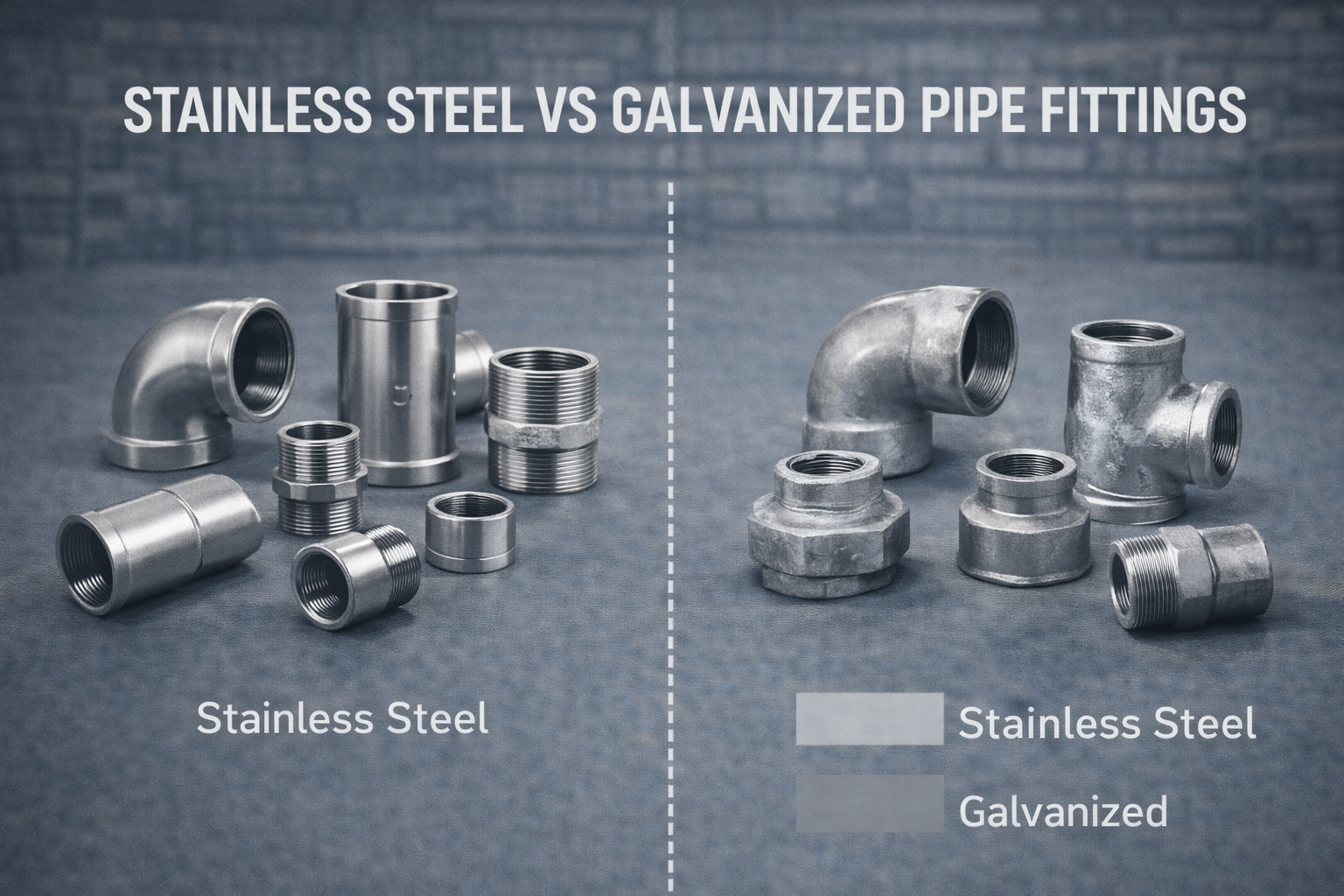
Stainless pipe fittings are made from stainless steel alloys that resist rust and corrosion. They are known for strength, clean finish, and long service life. These fittings work well in places where moisture, chemicals, or hygiene matter.
Common uses include water lines, food plants, chemical units, pharma setups, and modern buildings.
What Are Galvanized Pipe Fittings
Galvanized fittings are made from mild steel and coated with zinc. The zinc layer protects the steel from rust for a limited time. These fittings are widely used because they cost less and are easy to find.
They are common in basic plumbing, outdoor structures, and low-pressure systems.
Stainless vs Galvanized Fittings Comparison
| Feature | Stainless Pipe Fittings | Galvanized Pipe Fittings |
|---|---|---|
| Corrosion resistance | Very high | Moderate |
| Strength | High and stable | Good but lowers over time |
| Surface finish | Smooth and clean | Rougher zinc coating |
| Lifespan | 20–30+ years | 8–15 years |
| Maintenance | Very low | Medium |
| Cost | Higher | Lower |
| Best for | Water, food, chemical use | Basic plumbing and structures |
Performance and Durability
Stainless pipe fittings perform well in harsh conditions. They do not peel, chip, or rust easily. This makes them reliable for long-term use.
Galvanized fittings perform well in dry areas but can rust once the zinc layer wears off. In wet or chemical environments, their life reduces faster.
Cost and Value Comparison
| Factor | Stainless Fittings | Galvanized Fittings |
|---|---|---|
| Initial cost | High | Low |
| Long-term value | Very high | Medium |
| Replacement need | Rare | Frequent |
| Maintenance cost | Low | Higher over time |
Stainless fittings cost more at first, but they save money over time due to fewer repairs and replacements.
Where Each Type Works Best
Choose stainless pipe fittings when:
- Water quality matters
- Corrosion risk is high
- Long life is needed
- Clean appearance is important
Choose galvanized fittings when:
- Budget is limited
- Use is temporary
- Environment is dry
- Pressure is low
Industrial Buying Tip
For factories, plants, and infrastructure projects, selecting the right fitting quality is critical. Many industries prefer stainless pipe fittings for safety and long life. Trusted industrial suppliers like Udhhyog support large-scale steel requirements with consistent quality, correct grades, and reliable supply for demanding applications.
Conclusion
Both stainless and galvanized fittings have their place. Stainless pipe fittings offer strength, safety, and long service life. Galvanized fittings offer a low-cost option for simple jobs. The best choice depends on your environment, budget, and how long the system needs to last. Picking the right fitting today avoids problems tomorrow.