Steel channels play a vital role in modern construction, fabrication, racking systems, and industrial applications. Among the most commonly used types are C-Channels, U-Channels, and Slotted Channels. Although each of them may look similar at first glance, their shape, structure, load-bearing capacity, and applications are significantly different. Choosing the right channel type for your project improves safety, structural performance, and cost-efficiency.
In this detailed guide, we will compare C-Channel vs U-Channel vs Slotted Channel, explain their differences, advantages, weight variations, and real-world applications. We also include a special section on how Indian industries commonly use these steel channels for manufacturing and infrastructure development.
What is a C-Channel?
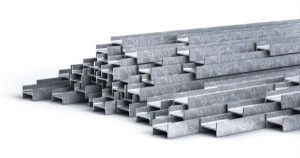
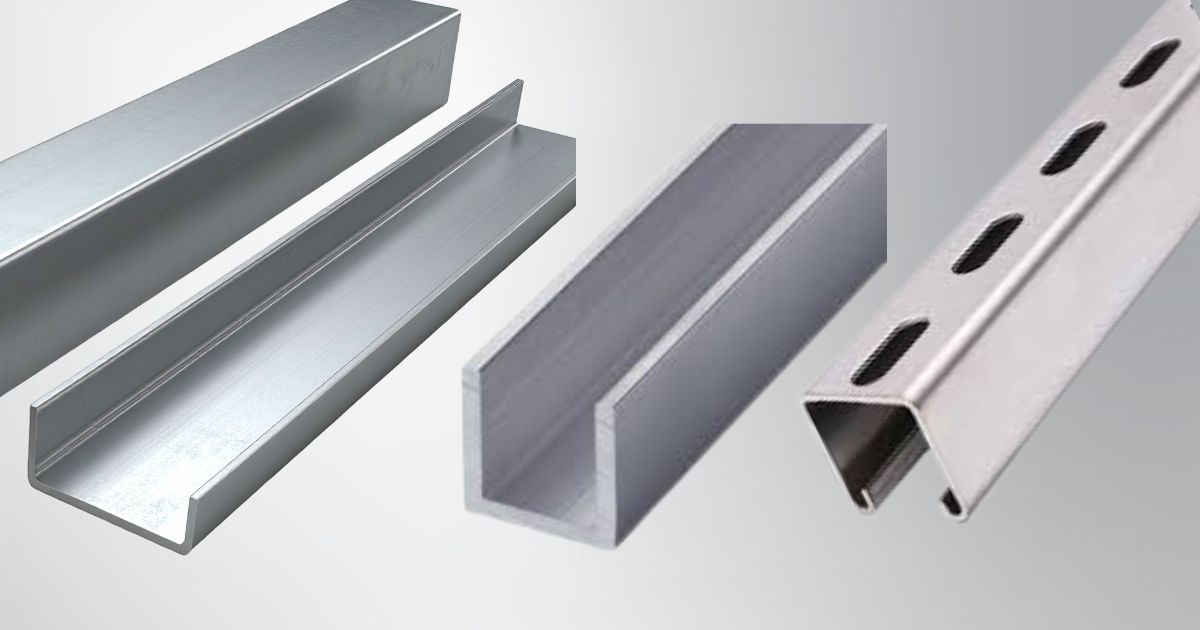
A C-Channel, also known as a C-shaped or MS C Channel, features a flat base with two vertical flanges, forming a “C” shape when seen from the side. This design provides excellent strength, rigidity, and load-bearing capacity.
Key Features of C-Channels
- High structural strength
- Ideal for vertical and horizontal load support
- Easy to weld, cut, and fabricate
- Suitable for medium to heavy construction
- Available in IS standard sizes (ISMC 75, ISMC 100, ISMC 125, ISMC 150, etc.)
Common Uses of C-Channels
- Building frames
- Bridges and trusses
- Industrial equipment support
- Machinery frames
- Solar panel structures
- Truck and trailer body fabrication
C-Channels are widely preferred in industrial fabrication where rigidity, load capacity, and durability are essential.
What is a U-Channel?
A U-Channel has a U-shaped profile with deeper sides and a wide base. It is generally thinner and lighter compared to C-Channels, making it suitable for light to medium-duty fabrication.
Key Features of U-Channels
- Lightweight and economical
- Great for aesthetic and design-focused structures
- Offers moderate load-bearing capacity
- Suitable for small fabrication and interior work
Common Uses of U-Channels
- Door frames
- Window frames
- Architectural design projects
- Cable tray supports
- Furniture frames
- Light partition structures
U-Channels provide structural support in applications where heavy loads are not involved.
What is a Slotted Channel?
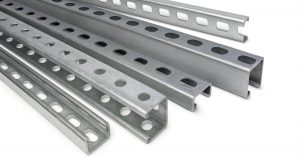
A Slotted Channel, often referred to as a Strut Channel, is a steel channel with uniformly spaced slots. These slots allow for easy installation of pipes, electrical conduits, cable trays, and HVAC systems.
Key Features of Slotted Channels
- Pre-punched slots for adjustable installation
- No drilling required
- Easy to assemble and dismantle
- Strong yet flexible support
- Compatible with nuts, bolts, clamps, and fittings
Common Uses of Slotted Channels
- Electrical and cable management systems
- Plumbing pipe support
- Racking and shelving systems
- HVAC installations
- Solar mounting
- Industrial automation frames
Slotted channels are extremely popular for industrial racking, modular construction, and adjustable support structures.
C-Channel vs U-Channel vs Slotted Channel: Key Differences
| Feature | C-Channel | U-Channel | Slotted Channel |
|---|---|---|---|
| Shape | C-shaped profile | U-shaped profile | U-shaped with slots |
| Strength | High | Medium | Medium-High |
| Weight | Heavy | Light-Medium | Medium |
| Load Capacity | Excellent | Moderate | Good but depends on slot pattern |
| Best For | Heavy structural work | Architectural & light fabrication | Cable, pipe & equipment support |
| Installation | Requires welding/bolting | Easy installation | Adjustable, modular |
| Cost | Higher | Economical | Moderate |
Which One Should You Choose?
C-Channel if:
- You need high strength
- Your project involves construction or machinery
- Long-term load-bearing is required
U-Channel if:
- You need a lightweight, economical option
- The application is decorative or interior-based
- No heavy load is involved
Slotted Channel if:
- The structure needs adjustability
- Installation should be quick and tool-friendly
- You need supports for electrical, plumbing, or HVAC systems
Importance of Steel Channels in Indian Industries
In India, steel channels are essential for industrial manufacturing, factory setup, warehouse construction, and heavy machinery installation. Companies in sectors like automobile, infrastructure, logistics, textile, food processing, and engineering rely on C-Channels and U-Channels for building robust steel structures.
Slotted Channels, on the other hand, are highly used in:
- Industrial shelving
- Conveyor systems
- Electrical installations
- Factory automation
Platforms like Udhhyog and B2B marketplaces help industries procure steel channels in bulk at competitive rates. Manufacturers depend on these channels for efficiency, durability, and long-term performance in their fabrication processes. If needed, you can visit our flat category to learn more
Benefits of Using Steel Channels
Cost-Effective
Steel channels offer a high strength-to-weight ratio at a reasonable price.
Easy Fabrication
Compatible with welding, drilling, cutting, and galvanizing.
Versatile
Suitable for light fabrication to heavy structural applications.
Long Life
Resistant to wear, corrosion (if coated), and extreme weather conditions.
Standardized Sizes
Follows IS:808 and IS:2062 standards for consistency and engineering accuracy.
Conclusion
Understanding the differences between C-Channels, U-Channels, and Slotted Channels helps you choose the right material for your construction, fabrication, or industrial project. Each channel type serves a unique purpose—from heavy structural support to light framing and adjustable installations. When selected wisely, they enhance safety, durability, and performance while reducing overall project cost.
Industries across India continue to prefer these channel types for their reliability, versatility, and strong performance in modern infrastructure and manufacturing applications.