TMT bars are the backbone of modern construction—whether you’re building a house, a commercial space, or a large infrastructure project. The strength, durability, and safety of your structure depend heavily on the quality of TMT bars used in the foundation, beams, pillars, and slabs. With so many grades, sizes, and brands available in the market, choosing the right TMT bar becomes crucial for your project’s long-term stability and performance.
This complete guide explains TMT bar grades, sizes, price factors, mechanical properties, and how to choose the best TMT bar for your construction. We have also included an industry-focused paragraph on Udyog and how the platform fulfills industrial steel requirements across India.
What Are TMT Bars and Why Are They Important?
TMT stands for Thermo-Mechanically Treated. These bars undergo a special process involving intense heating and rapid cooling. This process forms:
- A strong outer surface (martensite layer)
- A ductile and softer inner core
This unique combination gives TMT bars:
High strength
High flexibility
Earthquake resistance
Corrosion resistance
Because of these properties, TMT bars are essential for:
- Foundations
- Beams and columns
- RCC slabs
- Bridge construction
- Multi-storey buildings
- Infrastructure projects
Simply put: Without high-quality TMT bars, a structure cannot withstand load, shock, or environmental stress.
Understanding TMT Bar Grades
The grade of a TMT bar indicates its minimum yield strength (in N/mm²). Higher grade = higher strength.
Common TMT Grades in India
| Grade | Yield Strength (Approx) | Usage |
| Fe 415 | Moderate | Residential homes, small structures |
| Fe 500 | High | General construction, multi-storey buildings |
| Fe 500D | High + Superior ductility | Earthquake zones, heavy load |
| Fe 550 | Very high | Commercial buildings, bridges |
| Fe 550D | High strength + highest ductility | Large infrastructure, seismic areas |
| Fe 600 | Maximum strength | Special heavy-duty structures |
Fe 500 vs Fe 550 vs Fe 550D
Borrowing from Format 2, here’s a quick comparison:
- Fe 500 – Good balance of strength and flexibility; ideal for standard buildings.
- Fe 550 – Higher strength, used in high-load constructions.
- Fe 550D – Best ductility + strength; ideal for earthquake-prone regions, bridges, and underground structures.
TMT Bar Sizes & Their Applications
TMT bars come in various diameters based on structural needs:
Small Sizes – 6mm, 8mm
Used for:
- Stirrups
- Lightweight structures
- Internal reinforcements
Medium Sizes – 10mm, 12mm, 16mm
Used for:
- Residential slabs
- Beams and columns
- Commercial floors
Large Sizes – 20mm, 25mm, 32mm
Used for:
- Foundations
- Industrial projects
- Bridges
- High-rise structures
Engineers select sizes based on load requirements and IS 456 guidelines.
TMT Bar Prices: Factors That Affect the Rate
TMT bar prices vary due to several market and manufacturing factors:
1. Grade and Size
Higher grade = higher strength = higher cost
Larger diameter = higher price per piece but lower price per kg.
2. Raw Material Prices
Fluctuations in:
- Iron ore
- Billets
- Sponge iron
impact TMT bar prices directly.
3. Manufacturing Technology
Bars made using:
- German Tempcore technology
- Italian Quenching process
are more uniform and expensive.
4. Brand and Quality Certifications
ISI-certified, BIS-certified, and corrosion-resistant bars cost more.
5. Location & Local Demand
Prices vary from state to state based on transport cost and regional supply.
On average, TMT bar prices range between ₹45,000 – ₹62,000 per ton, depending on grade, size, brand, and city.
How to Select the Right TMT Bar (Expert Guide)
Selecting the right TMT bar ensures long-term durability, safety, and cost-effectiveness. Here’s what to check:
1. Check the Grade
- For standard homes → Fe 500 or Fe 500D
- For apartments, commercial buildings → Fe 550
- For bridges, seismic zones → Fe 550D or Fe 600
2. Verify IS 1786 Certification
Every TMT bar must follow IS 1786:2008 standards. Look for the ISI mark on the surface.
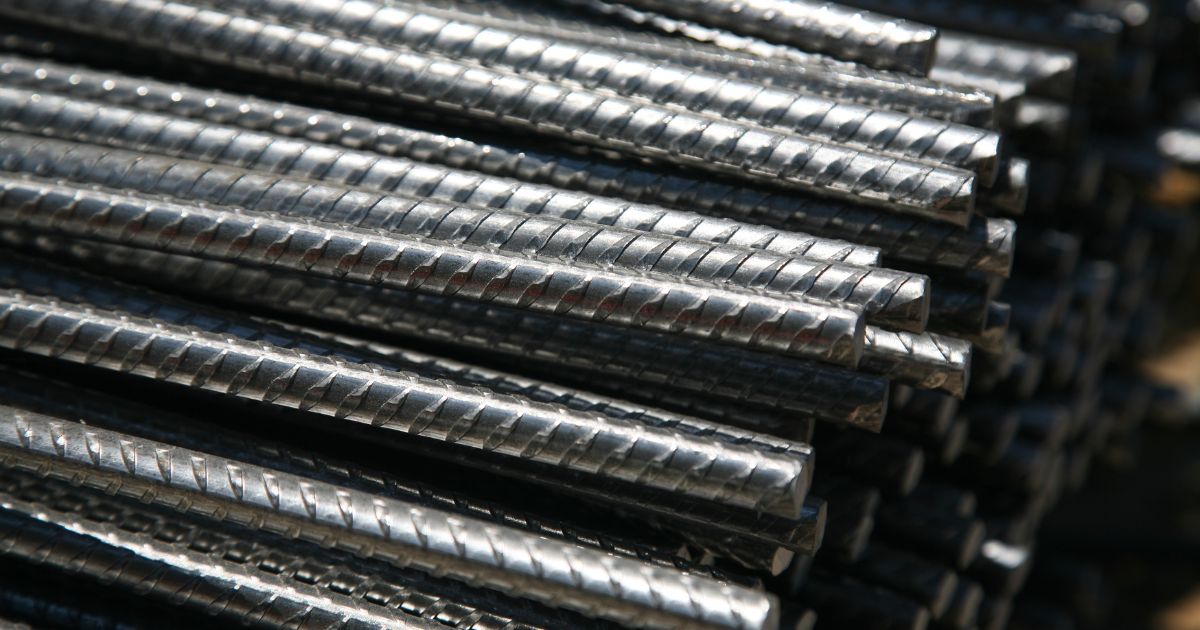
3. Check Rib Pattern
Deeper ribs ensure stronger bonding with concrete and prevent slippage.
4. Look for Corrosion Resistance
If your site is:
- Coastal
- High TDS water
- Humid climate
choose CRS TMT bars (Corrosion Resistant Steel).
5. Ask About Bendability
A strong TMT bar should bend without breaking. This ensures flexibility during earthquakes.
6. Choose Trusted Brands
India’s top TMT brands include:
- Tata Tiscon
- JSW Neosteel
- Jindal Panther
- RDTMT
- Kamdhenu
- Sail TMT
These brands follow BIS standards, provide uniform strength, and maintain quality control.
For companies involved in large-scale fabrication or construction, Udhhyog ensures reliable supply, quality assurance, and transparency, making it easier to complete industrial projects on time.
Benefits of Using High-Quality TMT Bars
Earthquake resistance
High ductility
Superior bonding with concrete
Corrosion and rust resistance
Fire resistance
Long-term durability
Cost-effective construction
Using premium TMT bars ensures your structure stands strong for decades. For more options and consistent quality, Udhhyog Steel Industrial Catalyst is also worth exploring.
Conclusion
Choosing the right TMT bar is one of the most important decisions in construction. Understanding the grades, sizes, mechanical properties, price factors, and brand quality helps you make the best choice for a safe, durable, and long-lasting structure. Whether you are building a home or a heavy infrastructure project, always choose ISI-certified TMT bars with strong bonding, flexibility, and high yield strength.With smarter platforms like Udhhyog, sourcing industrial steel—including TMT bars—has become more efficient, transparent, and cost-effective for both builders and industries.
If you’re also looking for Angle, you can check out our Angle category as well.