At a construction site in Delhi, a contractor once ordered MS pipes but received GI pipes by mistake. The team didn’t notice until welding time—sparks behaved differently, joints reacted differently, and the project was delayed. This small confusion highlights why understanding GI vs MS pipe differences matters for every industrial buyer, contractor, and fabricator.
Both pipes dominate construction, plumbing, fabrication, and industrial systems. Yet their properties, pricing, lifespan, and applications differ widely. Choosing the wrong one leads to premature rusting, high replacement costs, and structural failure risks.
What Are GI Pipes?
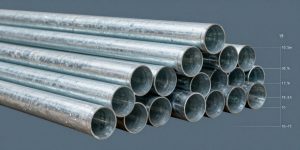
GI (Galvanized Iron) pipes are mild steel pipes coated with a protective layer of zinc.
This zinc layer acts as a corrosion barrier, making GI pipes ideal for water transport, outdoor exposure, and moisture-heavy environments.
According to industry data, hot-dip galvanizing increases corrosion resistance by 3x to 5x compared to uncoated steel (Source: standard manufacturing data).
What Are MS Pipes?
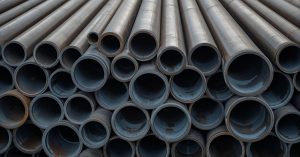
MS (Mild Steel) pipes are made from low-carbon steel. They are easy to weld, bend, and fabricate and are widely used in structural and industrial applications.
Their tensile strength usually ranges from 330–410 MPa, making them suitable for load-bearing use (Source: steel grade specifications).
Comparison Chart: GI Pipe vs MS Pipe
| Feature | GI Pipe | MS Pipe |
| Material | Mild steel with zinc coating | Plain mild steel |
| Corrosion Resistance | Very high | Moderate to low |
| Weldability | Lower due to zinc layer | Excellent |
| Lifespan | 20–50 years | 5–15 years (depends on environment) |
| Cost | Higher due to galvanization | Lower |
| Best Use | Water lines, outdoor piping | Structures, fabrication, machinery |
| Maintenance | Low | Higher in humid areas |
Where to Use Each Pipe
Choose GI Pipes for:
- Drinking water lines
- Irrigation systems
- Plumbing in coastal or humid zones
- Outdoor railing and fencing
- Fire-fighting systems
Choose MS Pipes for:
- Fabrication work
- Steel frames, gates, and trusses
- Industrial machinery
- Automotive parts
- Construction supports
GI pipes resist rust far better, while MS pipes offer easier fabrication and cost-efficiency.
If you’re exploring piping choices, you may also find our pipe Category helpful—especially for understanding how galvanization impacts pricing and performance.
Udhhyog supplies reliable industrial-grade steel products including GI, MS, structural sections, and fabrication materials. Whether you’re a contractor, industrial fabricator, plumbing business, or hardware trader, Udhhyog provides multiple sizes, bulk quantities, and competitive rates—all at one place for smoother procurement.
Conclusion
GI and MS pipes serve different structural and industrial purposes, and the right choice depends on corrosion exposure, weldability needs, and project budget. Understanding these differences ensures longer service life and better performance.
Which pipe suits your next project—GI or MS? Contact us to get the best industrial steel supply today.