Rohit, a contractor from Ghaziabad, still remembers the night a project deadline almost slipped away. He had a structural repair job where the client demanded strong but economical piping. Steel options were many, but pricing confused everyone on site. The team first checked SS pipes, and that reminded Rohit of a detailed SS pipe guide he had read earlier. It helped him understand grades quickly, but the final decision needed something cheaper. That was the moment when MS pipes entered the conversation. Their balance of strength and price saved the project. Many B2B buyers face similar decisions today, which is why this guide explains MS pipes clearly and simply.
Understanding MS Pipe
Mild Steel (MS) pipes are made from low-carbon steel. Their carbon content stays below 0.25 percent. This gives them flexibility, strength, and weldability. Industries use MS pipes for fluid transport, structure making, and framing.
Construction companies prefer them for scaffolding and structural support. Fabrication units choose them for frames and machinery bases. Plumbing teams use them for non-corrosive water lines. Traders like them because they sell in large volumes throughout the year.
A recent market survey showed MS pipes represent more than 35 percent of steel pipe consumption in India.
Source: Indian Carbon Steel Market Report, 2024.
Applications Across Multiple Sectors
Construction and Infrastructure
Construction teams use MS pipes in column supports, beam reinforcements, scaffolding, and general structure work. Their strength supports medium load applications.
Industrial Fabrication
Fabricators use MS pipes to build frames, conveyors, and machinery housings. Their weldability makes them ideal for complex frames.
Plumbing and Utility Lines
MS pipes work in water lines where corrosion risk is controlled. Their strength supports pressure variations.
B2B Wholesale Trade
Traders and hardware shops prefer MS pipes because demand stays constant year-round.
Comparison: MS Pipes vs SS Pipes and GI Pipes
MS vs SS Pipes
MS pipes cost lower but last shorter. SS pipes resist corrosion better. SS pipes suit chemical and water plants. MS pipes suit structural jobs.
MS vs GI Pipes
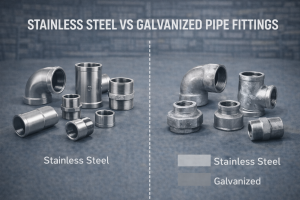
GI pipes resist rust better due to zinc coating. MS pipes offer lower prices. GI pipes serve water lines better. MS pipes serve structural use better.
Practical Differences
- MS pipes weigh more.
- SS pipes last longer.
- GI pipes resist moisture better.
These differences help buyers choose the correct material.
Price Overview of MS Pipes
MS pipe prices depend on size, thickness, grade, and demand. Market surveys show average MS pipe prices vary from ₹55 to ₹75 per kg in North India.
Source: Delhi Steel Wholesale Analysis, 2024.
Thicker and heavier pipes cost more. Round pipes cost different from square and rectangular pipes.
Common Price Patterns
- Light-weight pipes cost less.
- Heavy structural pipes cost more.
- Rectangular sections cost slightly higher.
Factors Affecting MS Pipe Prices
Raw Material Movement
MS pipe rates depend on coal, iron ore, and sponge iron prices. Carbon steel showed 8 to 12 percent fluctuation last year.
Source: Indian Steel Price Index Report.
Manufacturing Process
ERW pipes cost less. Seamless pipes cost more. Seamless pipes need precision and high-grade rolling.
Size and Thickness
Bigger diameters cost more. Higher thickness increases cost further.
Market Demand
Demand rises during project seasons. This increases prices for a few months.
Transportation Cost
Steel transportation adds cost for long distances. Heavy pipes increase delivery charges.
How Udhhyog Supports B2B Buyers
Udhhyog and its pipe products help traders, contractors, and fabrication units by offering many MS pipes and related steel products in multiple sizes with affordable rates in one place. This helps buyers reduce sourcing time and manage bulk needs efficiently without searching through several vendors.
Conclusion
MS pipes support construction, fabrication, plumbing, and many industrial jobs with good strength and reasonable pricing. Their market demand continues rising because they balance durability and cost. Understanding their pricing, comparisons, and uses helps buyers make better decisions for ongoing and future projects. Ready to source MS pipes for your next project and explore available sizes today?