Steel pipes are widely used in construction, plumbing, fabrication, and industrial projects. One of the first questions buyers ask is about steel pipe price, which often changes based on size, type, and material. Understanding these price differences helps you plan your budget and choose the right pipe for your job.
In this quick guide, we break down steel pipe prices by size, explain what affects pricing, and help you pick the right steel pipe without confusion.
Must check out our Channel blogs as well.
What Affects Steel Pipe Prices
Steel pipe prices do not stay fixed. They change due to raw material cost, pipe size, thickness, and manufacturing type.
Key price factors include:
- Pipe diameter and wall thickness
- Type of pipe (MS, GI, stainless steel, seamless, or ERW)
- Length of the pipe
- Market demand and steel rates
- Brand and quality standards
Larger and thicker pipes always cost more because they use more steel.
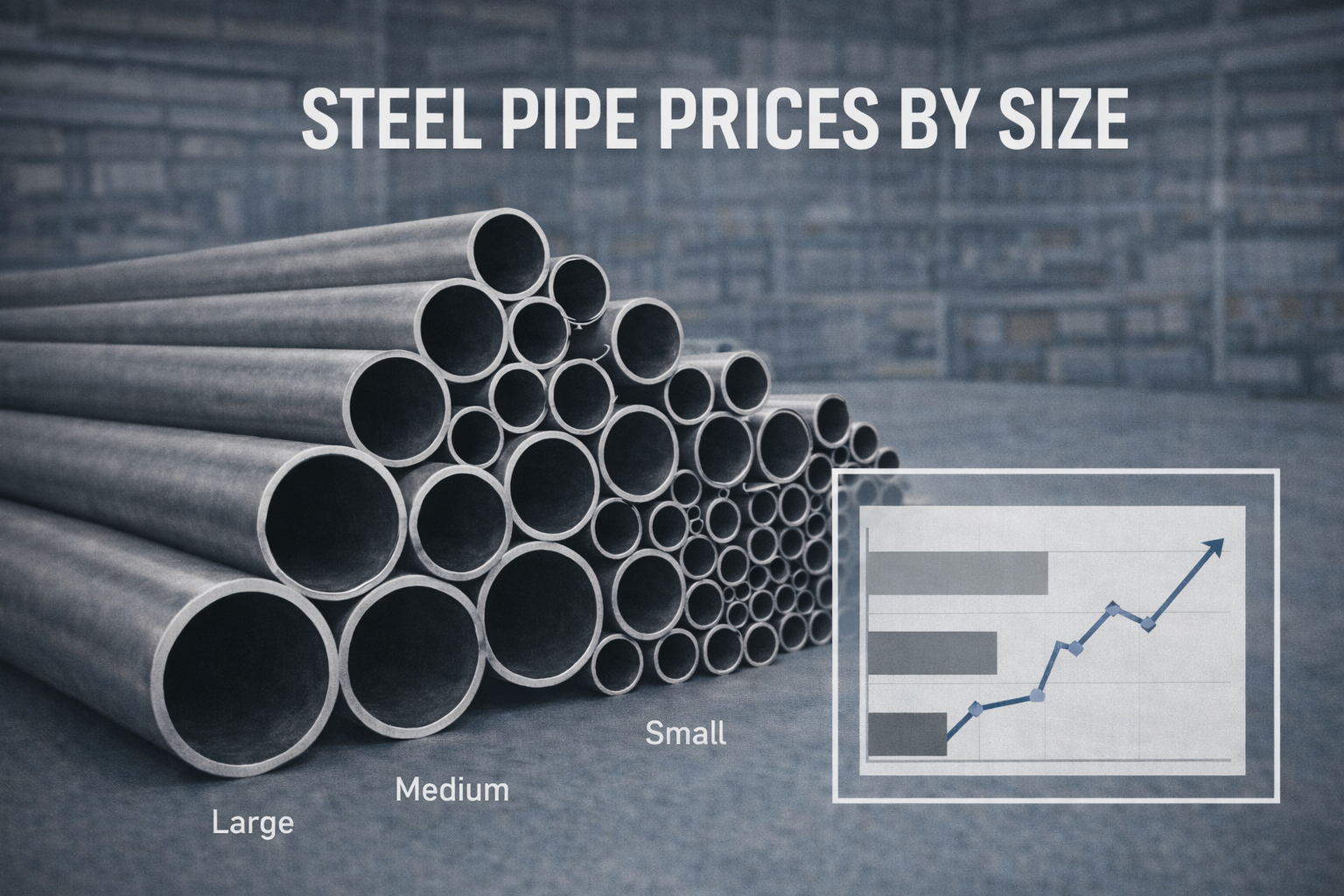
Steel Pipe Price by Size (Indicative Chart)
| Pipe Size | Thickness | Type | Approx Price Range (₹/meter) |
|---|---|---|---|
| ½ inch | 1.6–2.0 mm | MS Pipe | ₹120 – ₹180 |
| 1 inch | 2.0–2.6 mm | MS Pipe | ₹200 – ₹280 |
| 2 inch | 2.6–3.2 mm | GI Pipe | ₹420 – ₹550 |
| 3 inch | 3.2–4.0 mm | GI Pipe | ₹500 – ₹650 |
| 4 inch | 4.0–5.0 mm | MS Pipe | ₹850 – ₹1,100 |
| 6 inch | 4.5–6.0 mm | Steel Pipe | ₹1,600 – ₹2,200 |
Note: Prices may vary based on location, quantity, and brand.
Steel Pipe Types and Their Price Impact
Different steel pipes serve different purposes, which affects pricing.
- MS Pipes
Affordable and commonly used in construction and fabrication. - GI Pipes
Zinc-coated for rust protection. Cost more than MS pipes but last longer outdoors. - Stainless Steel Pipes
Higher price due to corrosion resistance and clean finish. Used in food, pharma, and water lines. - Seamless Pipes
No welding joint. Stronger and costlier. Used in pressure and industrial systems.
Size vs Weight vs Price Relation
As pipe size increases, weight per meter increases. More weight means more steel, which raises the price.
| Pipe Size | Approx Weight (kg/m) | Cost Impact |
|---|---|---|
| 1 inch | 2.5 – 3.0 | Low |
| 2 inch | 5.0 – 6.0 | Medium |
| 3 inch | 8.5 – 10.0 | High |
| 4 inch | 12.0 – 14.5 | Higher |
Choosing the right thickness avoids overpaying.
How to Choose the Right Steel Pipe
Before buying, always match the pipe to your actual need.
- Use MS pipes for basic structure and frames
- Choose GI pipes for water lines and outdoor use
- Pick stainless steel for hygiene or corrosion-prone areas
- Avoid thicker pipes if load demand is low
- Buy standard lengths to reduce cutting waste
For factories, infrastructure projects, and bulk steel needs, many buyers rely on Udhhyog for consistent supply, correct sizing, and industrial-grade steel solutions. Working with a reliable supplier ensures quality and stable pricing.
Conclusion
Steel pipe prices depend mainly on size, thickness, and type. Bigger pipes cost more, but choosing the correct size can save a lot of money. Always check the application before buying and compare sizes carefully. With the right planning and supplier, you get strong performance without overspending.