GI slotted channels are widely used in electrical, mechanical, and structural projects. They support cable trays, pipes, HVAC systems, and mounting frames. While the product itself is strong and reliable, many problems occur due to improper installation. Small mistakes during fitting can reduce strength, cause misalignment, and increase maintenance costs.
This guide explains the most common mistakes people make when installing a GI slotted channel and how to avoid them.
You can also explore our Channel category for more related products
What Is a GI Slotted Channel?
A GI slotted channel is a galvanized iron channel with pre-punched slots. The zinc coating protects it from rust, while the slots make installation faster and adjustable. These channels are commonly used in industrial buildings, commercial spaces, factories, and warehouses.
Common Installation Mistakes to Avoid
Using the Wrong Channel Size
One major mistake is choosing a channel that is too thin or narrow. Light-duty channels cannot handle heavy loads.
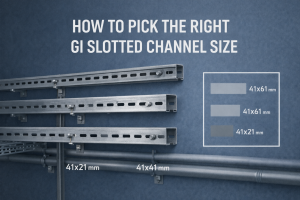
GI Slotted Channel Size Guide
| Channel Size (mm) | Thickness (mm) | Recommended Use |
|---|---|---|
| 41 × 21 | 1.6 | Light electrical supports |
| 41 × 41 | 2.0 | Medium cable trays |
| 41 × 62 | 2.5 | Heavy HVAC and piping |
Always match channel size with load.
Ignoring Load Calculations
Many installers skip load checks. Overloading causes bending and joint failure. Weight of cables, pipes, and accessories must be added before selection.
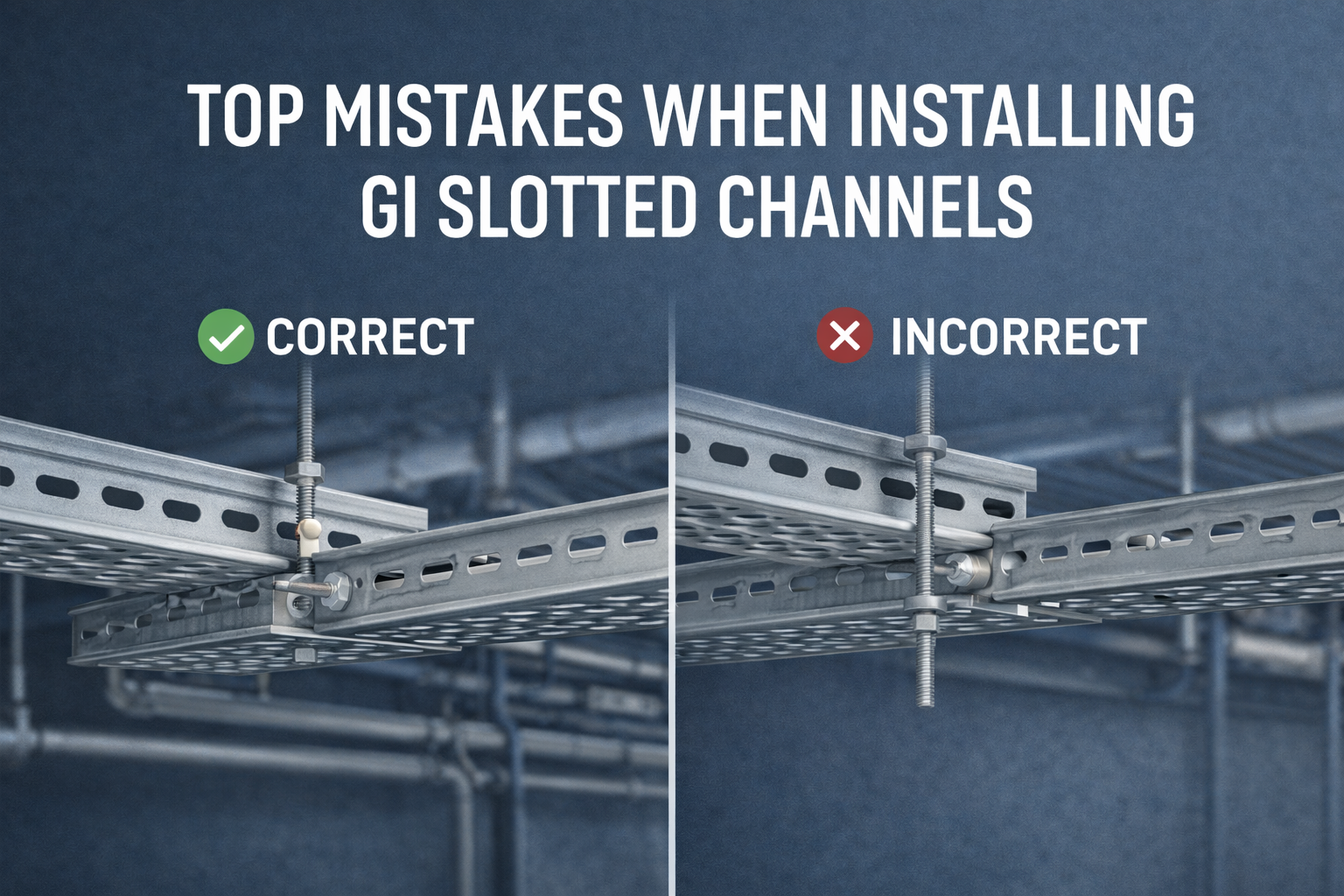
Poor Fastening and Alignment
Loose bolts or uneven spacing reduce stability. Slotted channels must be fixed with proper anchors and tightened evenly. Poor alignment affects system balance and safety.
Skipping Corrosion Protection at Cut Edges
Cut edges expose bare steel. Without touch-up zinc coating or paint, rust starts early. This mistake shortens channel life.
Incorrect Spacing Between Supports
Wide spacing increases stress on the channel. Close and uniform spacing improves strength and reduces vibration.
Support Spacing Reference
| Load Type | Recommended Support Gap |
|---|---|
| Light cables | 1.5 meters |
| Medium piping | 1.2 meters |
| Heavy equipment | 0.8–1.0 meters |
Not Checking Surface Quality
Low-quality galvanization leads to early corrosion. Uneven coating or surface cracks are warning signs. Always inspect the finish before installation.
Material Selection Mistake
Using non-galvanized or low-grade steel instead of GI reduces durability. GI channels are preferred because they resist moisture and outdoor exposure.
Industrial Supply Matters
For large electrical and mechanical projects, consistent quality is critical. Many contractors prefer sourcing from experienced industrial suppliers like Udhhyog, which support a wide range of steel and structural requirements. Reliable supply helps avoid mismatched sizes, delays, and quality issues during installation.
Benefits of Correct Installation
When installed properly, GI slotted channels offer strong support, easy adjustments, and long service life. Correct sizing, spacing, and fastening reduce repairs and improve safety.
Conclusion
Most problems with GI slotted channel systems come from installation mistakes, not the product itself. Choosing the right size, calculating loads, protecting cut edges, and using proper spacing makes a big difference. With careful planning and quality materials, GI slotted channels provide reliable and long-lasting support for electrical and mechanical systems.
It is used to support cable trays, pipes, ducts, and electrical systems.
Slotted channels allow easy mounting and adjustment of structural and electrical components.
GI stands for Galvanized Iron channel.
Galvanized iron is best due to its strength and corrosion resistance.