The first time a contractor explained TMT grades to me, he used a simple comparison. He said, “Choosing between Fe 500 and Fe 550 is like choosing between two champions—one flexible, one fierce.”
That line stuck with me.
Because in construction, even small grade differences decide safety, lifespan, and total cost.
This guide breaks down Fe 500 and Fe 550 TMT bars in the simplest and most practical way so builders, fabricators, contractors, traders, and infrastructure teams can choose confidently.
What Are TMT Bars?
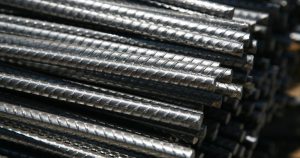
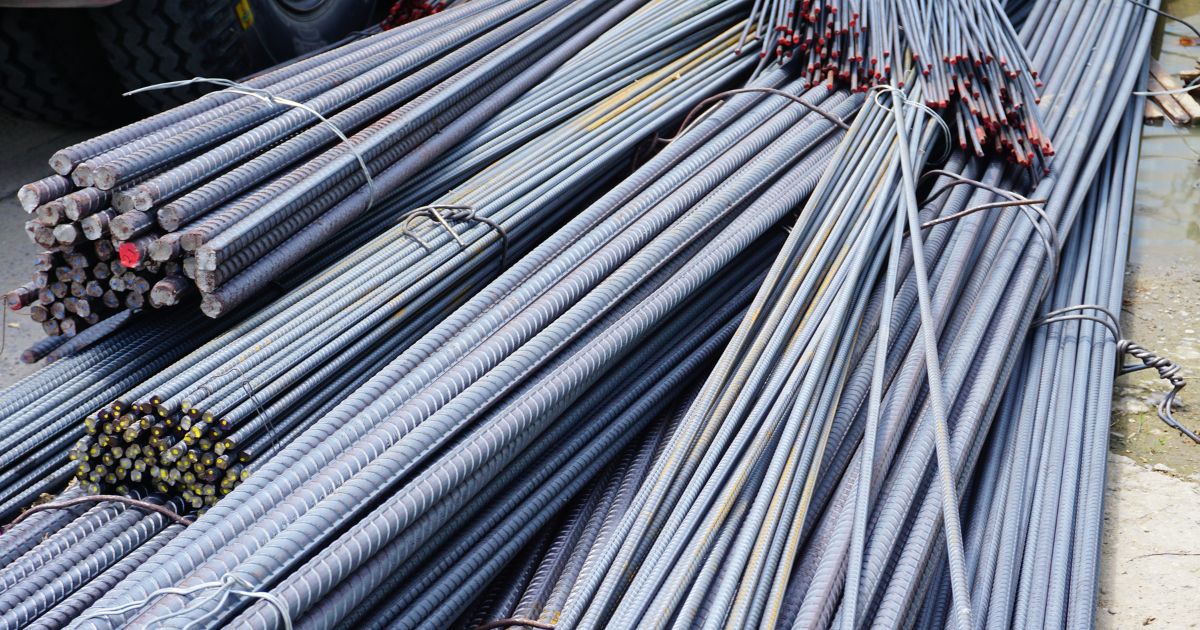
TMT (Thermo-Mechanically Treated) bars have a hard outer layer and a softer core.
This dual structure makes them both strong and bendable, ideal for Indian climate, heavy loads, and seismic activity.
They form the skeleton of foundations, slabs, beams, pillars, and industrial structures.
Factors Affecting Price
- Raw material cost (billets & scrap)
- Manufacturing technology
- Transportation cost
- Brand premium
- Demand–supply cycle
- Local market competition
- IS certification quality
These price fluctuations apply to both Fe 500 and Fe 550.
If you understand how grades differ here, you should also check our detailed guide on TMT bars, where we covered sizes, grades, and choosing criteria. That blog will give deeper clarity on how TMT selection impacts structural safety and cost.
Understanding Grades: Fe 500 vs Fe 550
The number indicates minimum yield strength in MPa (megapascal).
Higher strength = higher load capacity.
| Grade | Yield Strength (fy) | Tensile Strength (fu) | Ductility | Suitable For |
| Fe 500 | 500 MPa | 545 MPa | High | Residential + Commercial |
| Fe 550 | 550 MPa | 585 MPa | Medium | Industrial + Heavy Projects |
Data Source: IS 1786:2008 Standards (Indian Standard for TMT Bars)
Chemical Difference
The strength & ductility depend on carbon, sulphur, phosphorus content.
| Parameter | Fe 500 | Fe 550 |
| Carbon | ~0.30% | ~0.25% |
| Sulphur | ~0.055% | ~0.040% |
| Phosphorus | ~0.055% | ~0.040% |
| Combined (S+P) | ~0.105% | ~0.070% |
Fe 550 contains lower impurities, which improves strength and corrosion resistance.
Mechanical Properties Compared
Fe 500
- Yield Strength: 500 N/mm²
- Ultimate Tensile Strength: 545 N/mm²
- Elongation: 12%
Fe 550
- Yield Strength: 550 N/mm²
- Ultimate Tensile Strength: 585 N/mm²
- Elongation: 10–12%
Both are important for seismic zones Fe 550 is stronger, but Fe 500 bends more.
Price Comparison (2025 Market Trend)
| Diameter (mm) | Fe 500 Price (₹/kg) | Fe 550 Price (₹/kg) |
| 8mm | ₹56–₹62 | ₹57–₹64 |
| 10mm | ₹55–₹61 | ₹56–₹63 |
| 12mm | ₹54–₹60 | ₹55–₹62 |
| 16mm | ₹53–₹59 | ₹54–₹61 |
| 20mm+ | ₹53–₹58 | ₹54–₹60 |
Fe 550 costs slightly more because of higher strength, lower impurities, and better load capacity.
Prices vary by state, demand, and raw material costs
Applications: Where Each Grade Works Best
1. Fe 500 – Balanced Strength & Flexibility
Ideal for:
- Residential buildings
- Commercial complexes
- Medium-rise structures
- Earthquake-prone zones
- Reinforced cement concrete (RCC) frames
Why?
Its ductility allows the structure to absorb shock without cracking.
2. Fe 550 – High Strength for Heavy Loads
Ideal for:
- Industrial sheds
- Bridges
- Flyovers
- Highways
- Dams
- Large-scale infrastructure
- Underground structures
Why?
Its high yield strength supports massive and continuous loads.
If you’re looking for a trusted supplier, you can check out Udhhyog Steel Industrial Catalyst as well.
Conclusion
Fe 500 and Fe 550 are both powerful grades, but their applications differ.
Fe 500 offers flexibility, while Fe 550 delivers sheer strength.
Choose based on building design, load capacity, and long-term durability.
Which TMT grade suits your project requirement today?
For related materials, feel free to explore our Channel category too.