When choosing steel pipes for construction or fabrication, shape matters as much as size. A common question many buyers ask is whether a 3 inch square pipe is stronger than a round pipe of the same size. Both shapes are widely used in buildings, machinery, frames, and support structures. This guide explains the strength, uses, and key differences in a clear and simple way to help you choose the right option.
Understanding 3 Inch Square and Round Pipes
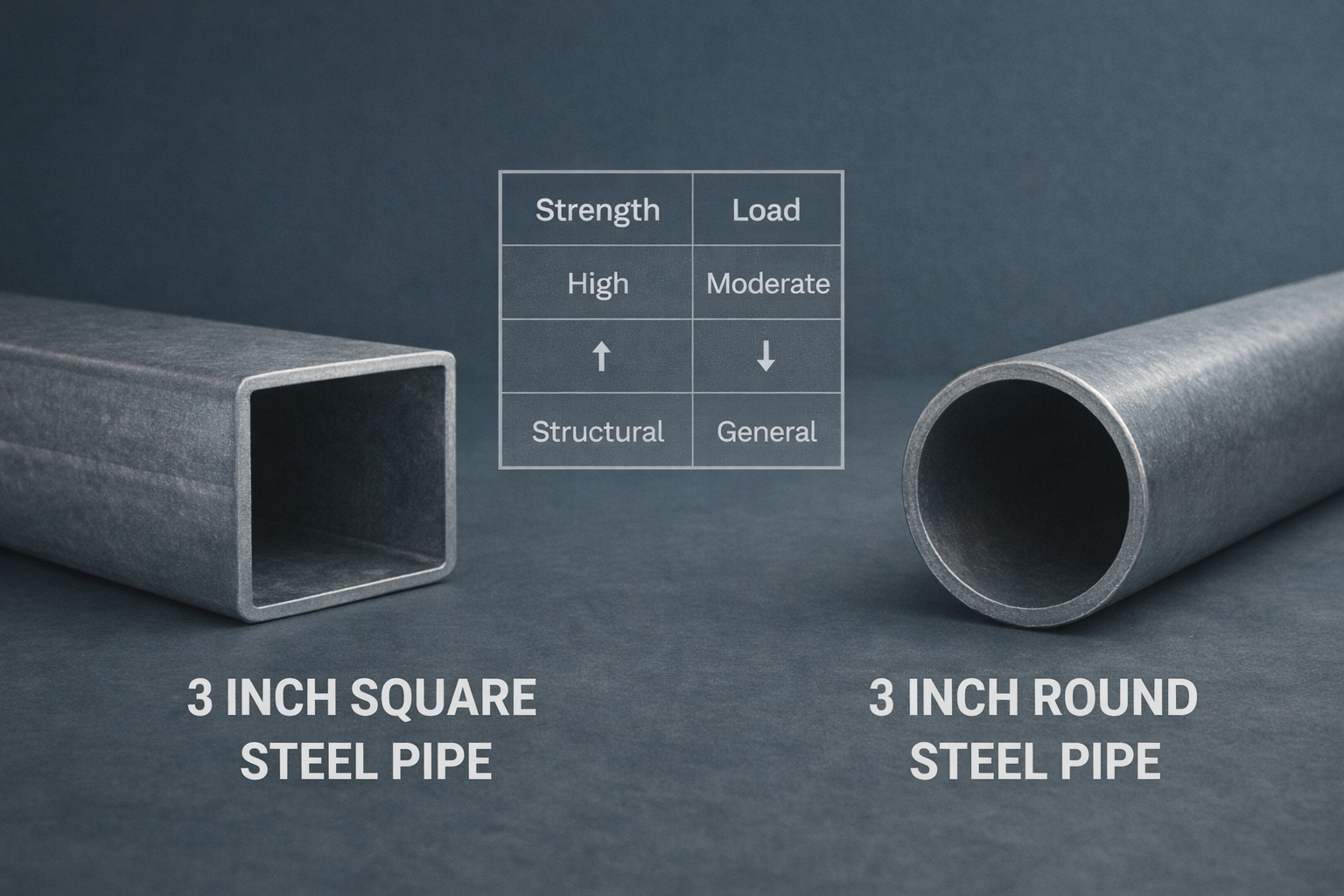
A 3 inch square pipe has equal sides, usually measured as 75 × 75 mm. A 3 inch round pipe has a circular cross-section with a similar outer diameter. Both are mostly made from mild steel and are available in different thicknesses. While the material is the same, the shape changes how the pipe handles load and pressure.
Square pipes spread force evenly across flat surfaces. This makes them strong for bending and structural support. Round pipes handle pressure better because stress spreads evenly around the curve. This makes them suitable for fluid flow and long spans.
Must visit our flat category to learn more about flats.
Strength Comparison: Square vs Round
Strength depends on how the pipe is used. For frames, platforms, and columns, square pipes often perform better. For pipelines and curved structures, round pipes work well.
Strength Comparison Chart
| Feature | 3 Inch Square Pipe | 3 Inch Round Pipe |
|---|---|---|
| Bending strength | Higher | Moderate |
| Load handling | Very good | Good |
| Pressure handling | Moderate | Excellent |
| Welding & fitting | Easy on flat sides | Needs curved fittings |
| Structural stability | High | Medium |
Weight Comparison by Thickness
Weight affects cost and handling. Below is a general comparison for common thicknesses.
Approximate Weight Chart (Per Meter)
| Thickness (mm) | Square Pipe Weight (kg/m) | Round Pipe Weight (kg/m) |
|---|---|---|
| 2.5 mm | 5.6 kg | 5.2 kg |
| 3.0 mm | 6.6 kg | 6.2 kg |
| 4.0 mm | 8.6 kg | 8.1 kg |
Note: Actual weight may vary based on manufacturing tolerance.
Uses of 3 Inch Square Pipe
Square pipes are widely used where strength and clean design matter. Common uses include building frames, stair railings, gates, machine supports, solar structures, and warehouse sheds. The flat surface makes them easy to align and weld, which saves time during installation.
Uses of 3 Inch Round Pipe
Round pipes are mainly used for water lines, scaffolding, fencing, handrails, and transport of fluids or gases. Their shape reduces resistance inside the pipe and handles internal pressure better.
Cost and Availability
In most markets, square pipes cost slightly more than round pipes because they use more steel for the same outer size. However, the higher strength often reduces the need for extra supports. When chosen correctly, this can lower overall project cost.
Choosing the Right Pipe for Your Project
Choose a 3 inch square pipe if your project needs strong support, flat surfaces, and stable frames. Choose a 3 inch round pipe if your work involves fluid flow, curved layouts, or pressure handling.
For large projects, sourcing consistent quality steel is important. Many contractors prefer working with reliable industrial suppliers like Udhhyog, which support a wide range of steel requirements for construction, fabrication, and infrastructure needs.
If you’re looking for a trusted supplier, you can check out Udhhyog Industrial Catalyst Pvt. Ltd as well.
Conclusion
There is no single winner between square and round pipes. A 3 inch square pipe wins in bending strength and structural use, while a round pipe wins in pressure handling and flow. The best choice depends on how and where the pipe will be used. By understanding strength, weight, and application, buyers can make a smart and cost-effective decision.