A project contractor once told me, “A building survives decades only if its foundation is blessed with the right steel.”
That stuck with me. In Delhi and NCR, where structures face heat, congestion, and increasing seismic activity, choosing the right reinforcement steel isn’t an option — it’s survival. Among all options, TMT bars stand out as the backbone of modern construction, shaping homes, bridges, industries, and critical infrastructure.
This comprehensive guide explains everything a contractor, industrial fabricator, hardware dealer, plumbing/infrastructure company, or B2B buyer needs to know — from application, treatment process, grade comparisons, and pricing factors to selecting the right supplier.
What Is a TMT Bar?
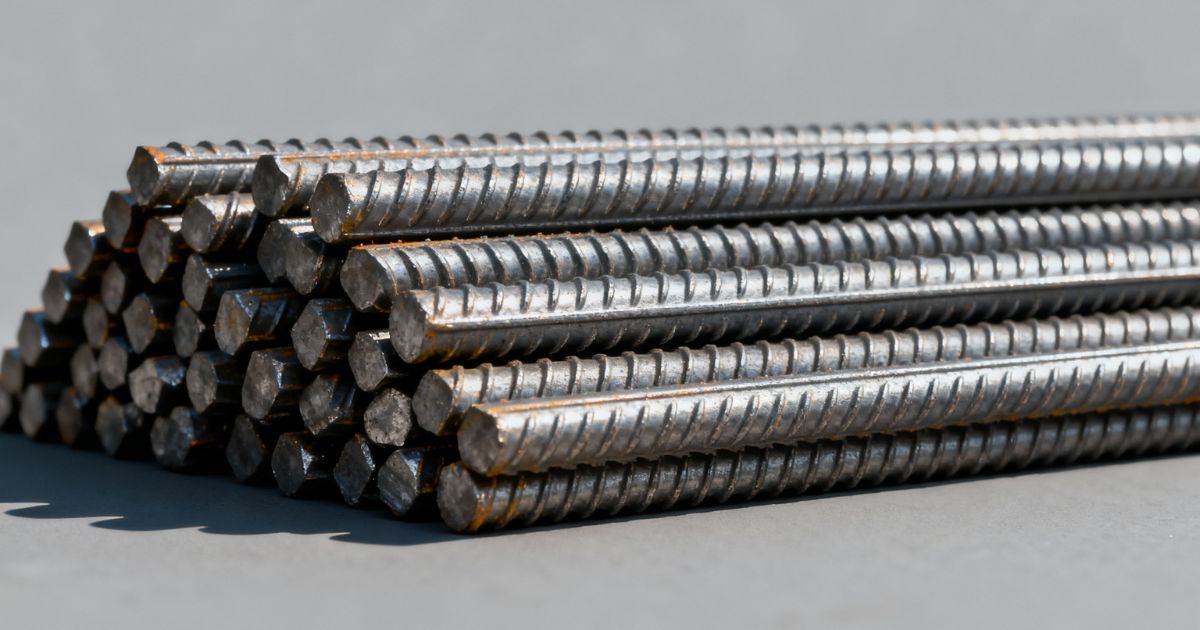
TMT stands for Thermo-Mechanically Treated bar.
These bars undergo a specialised heat-cooling-tempering cycle that gives them:
- A hard outer shell (for strength)
- A soft inner core (for ductility and bending ability)
This dual structure makes them ideal for seismic zones and high-load structures.
How TMT Bars Are Made
The manufacturing process includes:
1. Hot Rolling
Steel wires pass through rolling mills to get the required shape.
2. Quenching
The red-hot bars move through a Tempcore water-cooling system.
Controlled pressure rapidly cools the outer surface, making it extremely hard.
3. Self-Tempering
The inner hot core transfers heat outward, tempering the quenched layer and enhancing flexibility.
4. Atmospheric Cooling
Bars cool gradually, forming a ferrite-pearlite internal structure — the key to ductility, weldability, and corrosion resistance.
This advanced process ensures strength without compromising flexibility, reducing the risk of sudden failure.
Why TMT Bars Matter in Construction
TMT bars are engineered for durability in all environments — whether residential towers, bridges, flyovers, or industrial buildings. Their advantages stem from their unique microstructure and controlled manufacturing.
1. Superior Tensile Strength
TMT bars can handle heavy loads and structural shocks.
India’s construction sector consumed over 100 million tonnes of steel in 2024, and TMT accounted for the majority (source: Ministry of Steel).
2. Enhanced Ductility
The inner core bends without breaking — essential for earthquake-prone regions like NCR and northern India.
3. Natural Corrosion Resistance
Lower carbon content + refined microstructure = better durability in humid or flood-prone zones.
4. High Thermal Resistance
TMT bars maintain structural integrity even during fire hazards.
5. Cost Effectiveness
Though slightly costlier than basic MS bars, TMT bars offer long-term savings through reduced repair, lower steel usage, and higher strength.
TMT Bars vs Other Reinforcement Materials
| Feature | TMT Bars | MS Bars | HYSD Bars |
| Strength | Very High | Moderate | High |
| Ductility | Excellent | Low | Moderate |
| Corrosion Resistance | High | Low | Moderate |
| Fire Resistance | High | Low | Medium |
| Earthquake Safety | Excellent | Poor | Medium |
TMT bars outperform in almost every category, making them the preferred choice for modern RCC construction.
Applications of TMT Bars
TMT bars are used extensively across:
1. Residential Construction
Houses, apartments, and foundations require flexible yet strong reinforcement.
2. Commercial Buildings
Shopping complexes, manufacturing units, and IT parks need high load-bearing capacity.
3. Heavy Infrastructure
Flyovers, metro stations, highways, airport terminals, and bridges rely heavily on TMT grades Fe-500D and Fe-550D.
4. Water Retaining Structures
Dams, reservoirs, and tanks require corrosion-resistant reinforcement.
5. Industrial Structures
Factories, machine foundations, warehouses, and sheds depend on TMT bars for impact resistance.
TMT Bar Grades & Choosing the Right One
The most common grades in India:
Fe 500
✔ Standard strength
✔ Used for low-rise structures
Fe 500D
✔ Higher ductility
✔ Ideal for seismic zones
✔ Most recommended for Delhi NCR
Fe 550D
✔ Higher yield strength
✔ Suitable for bridges, highways, and heavy commercial construction
Consider:
- Ductility requirements
- Geographic seismic zone
- Structural load
- Budget
Factors Affecting TMT Bar Price
Prices vary across Delhi, Noida, Ghaziabad, Gurugram, Faridabad, and Sonipat because of:
1. Raw Material Prices
Iron ore and billet cost fluctuations affect daily pricing.
2. Manufacturing Grade
D and SD grades are higher priced due to better ductility.
3. Size and Diameter
8mm, 10mm, 12mm, 16mm, and 20mm are commonly used.
Larger diameters cost more due to weight per metre.
4. Supply & Demand
High construction seasons in NCR impact pricing trends.
5. Brand & Certification
TMT bars complying with IS 1786:2008 command higher prices.
Earlier, we discussed the importance of strong steel in our GI Pipe blog, where corrosion resistance plays a major role.
The same principle applies to TMT bars — durability begins with the right treatment.
How Udhhyog Helps B2B Buyers
Udhhyog offers TMT bars in multiple grades and all popular sizes at competitive rates, making procurement easy for contractors, dealers, and industrial buyers.
With reliable quality and bulk availability at one place, we ensure smoother supply for Delhi NCR and neighbouring regions.
Conclusion
TMT bars are the backbone of modern construction, blending strength, flexibility, corrosion resistance, and long-term durability. Whether you’re building a home, a commercial tower, or large infrastructure, the right TMT grade determines structural life and safety.
Are you ready to source the right TMT bars at an affordable rate and streamline your material procurement with Udhhyog?